The best car subwoofers
Car bass is a different problem from home bass. The cabin is tiny, so physics is on your side — below about 60 Hz a car's interior boosts bass for free (cabin gain), which is why an 8-inch sub in a car can hit like a 12 at home. The real decisions are practical: how much space you'll sacrifice, whether your stereo has the outputs to feed a sub, and whether you want a self-contained powered unit or a passive enclosure with a separate amplifier.
The picks below are organised around those decisions. Powered under-seat units are the no-sacrifice option: they hide under a seat, include their own amplifier, and accept speaker-level inputs so they work with a completely stock stereo. One-box powered enclosures trade some boot space for real driver area. Passive enclosures are the loudest per dollar — but budget for a mono amplifier and a wiring kit before comparing prices.
Best under-seat overall
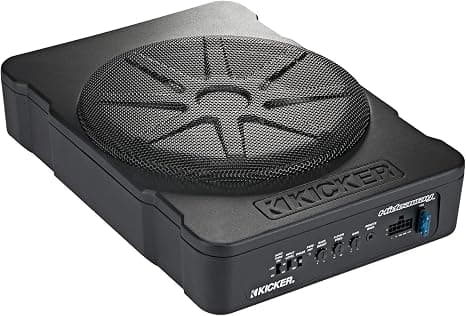
Kicker Hideaway HS10 (51HS10)
10″ sealed · 180 W RMS · down to ~25 Hz · ~$400
The biggest driver and the most honest power in the under-seat class — a real 10-inch cone and 180 watts RMS in a cast-aluminium case three inches tall. Includes the remote bass knob, and its high-level inputs work with any factory stereo.
Best value under-seat
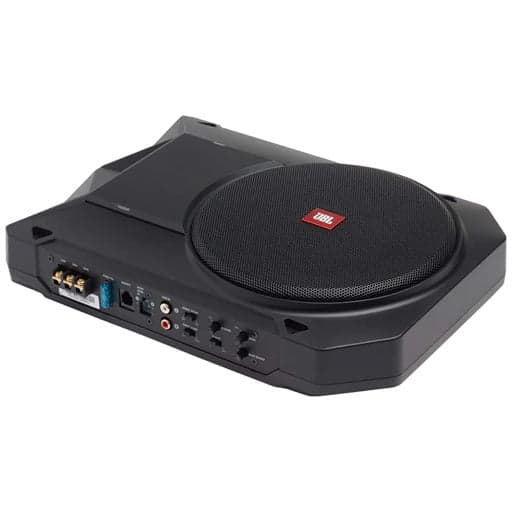
JBL BassPro SL2
8″ sealed · 125 W RMS · down to ~35 Hz · ~$380
125 watts and an 8-inch driver at a friendlier price than the Kicker. It gives up some output but not the essentials: high-level inputs, a wired level remote, and a slim housing that fits under most seats.
Cleanest compact pick
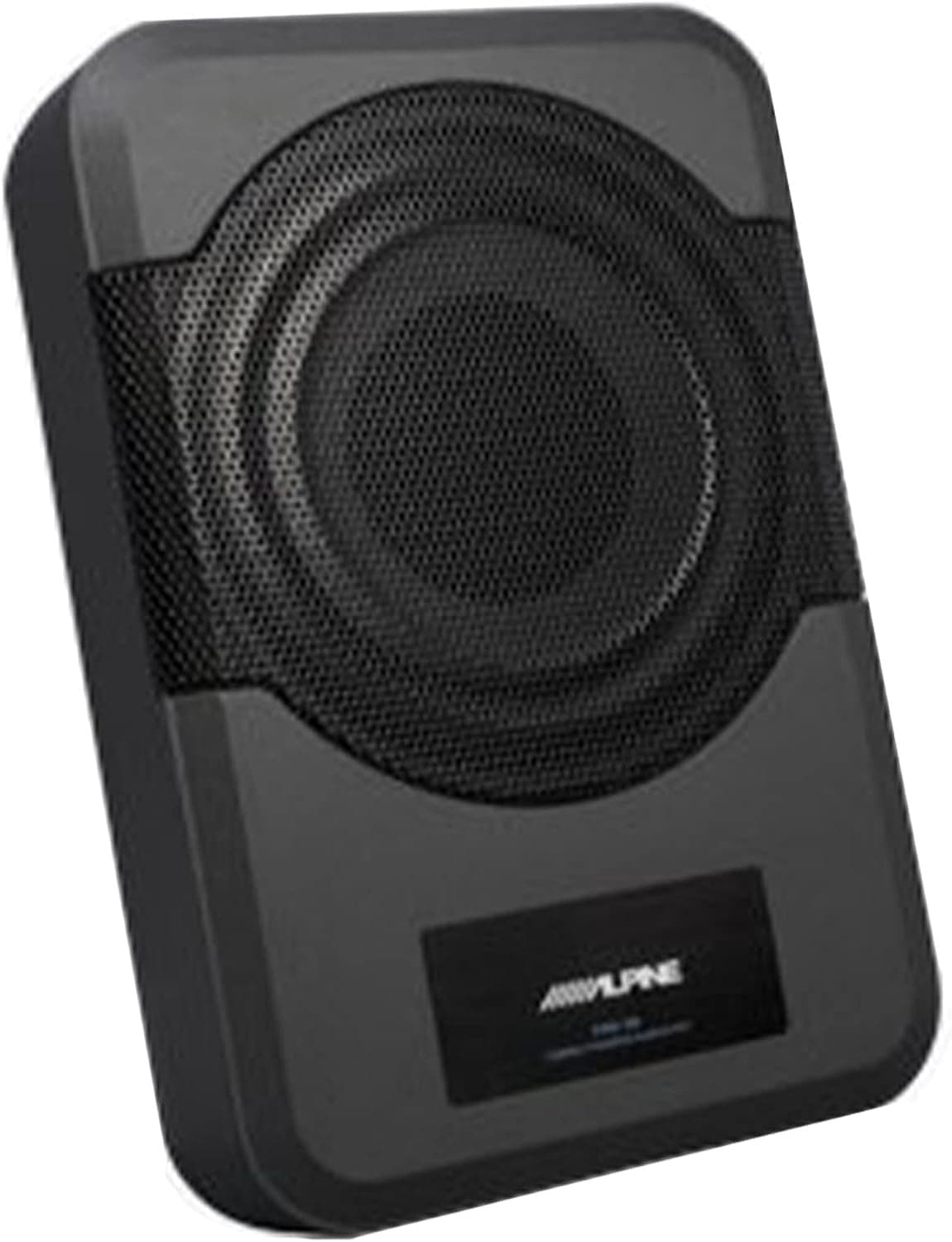
Alpine PWE-S8
8″ sealed · 120 W RMS · down to ~25 Hz · ~$400
Alpine tunes for accuracy rather than boom — the right pick if you listen to music that needs texture rather than just impact. The remote's long cable reaches any dash, and the cast enclosure keeps resonance out of the sound.
Smallest footprint
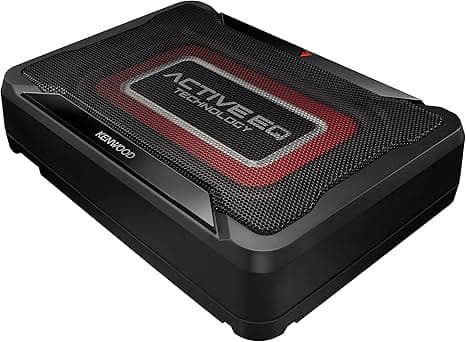
Kenwood KSC-PSW7EQ
8.25″ sealed · 80 W RMS · down to ~40 Hz · ~$330
Under six pounds and less than three inches tall — it fits under seats that reject everything else. It won't rattle mirrors, but it fills in the bottom octave a factory system is missing, which is the actual job.
Best one-box trunk sub
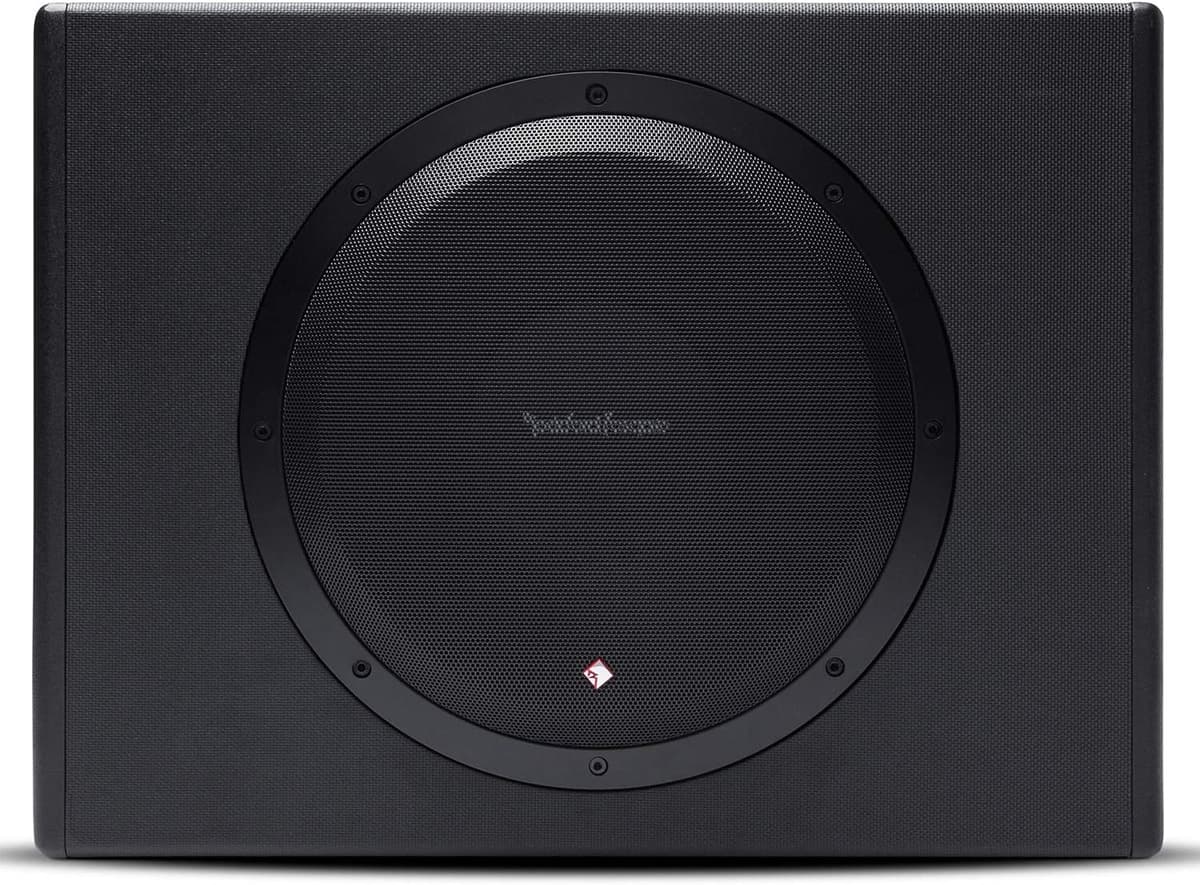
Rockford Fosgate P300-12
12″ sealed · 300 W RMS · down to ~35 Hz · ~$390
A 12-inch driver, 300-watt amp, and sealed wedge cabinet in one unit. No enclosure calculations, no amp matching — connect power and signal and it works. The step up in authority over any under-seat unit is unmistakable.
Best ported one-box (no amp needed)
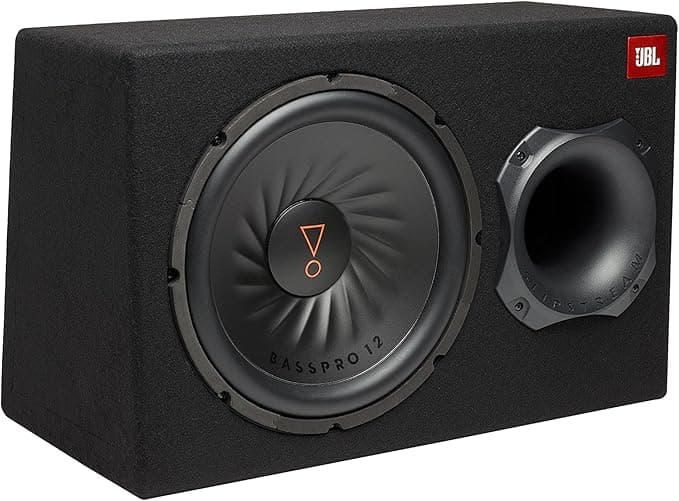
JBL BassPro 12 (SUBBP12AM)
12″ ported · 150 W RMS · down to ~30 Hz · ~$350
The powered alternative to a passive build: a 12-inch driver and built-in amp in a ported enclosure, so it plays louder per watt than the sealed Rockford and needs no separate amplifier like the Skar. High-level inputs mean it drops onto a factory stereo, and it lands cheaper than the sealed one-box — the value play when you want ported output without a wiring project.
Loudest per dollar (needs an amp)
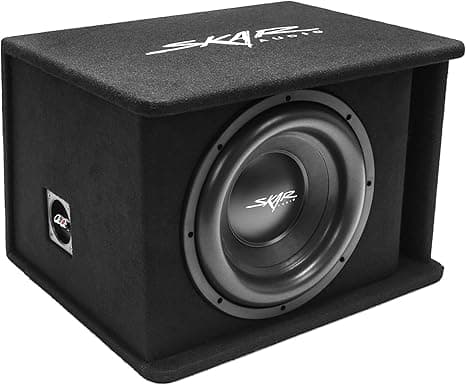
Skar Audio SDR-1X12D2
12″ ported · 0 W RMS · down to ~36 Hz · ~$250
A ported 12 that handles 600 watts RMS for the price of a modest under-seat unit — but it's passive, so add a 1-ohm-stable mono amplifier and wiring kit (~$200+) to the real total. For pure output per dollar, nothing powered comes close.
How to buy car bass without regrets
Count the whole system, not the box price
Powered subs need a wiring kit (~$25–50) for power and signal. Passive enclosures also need a mono amplifier matched to the sub's RMS rating and impedance. Compare complete-install prices and the 'cheap' passive route often isn't.
Factory stereo? You want high-level inputs
Every powered pick here accepts speaker-level (high-level) inputs, which tap the factory speaker wiring — no RCA outputs or head-unit swap needed. Most also auto-switch on when they sense signal.
RMS watts are the only watts
Car audio marketing leans on peak numbers even harder than home audio. Compare continuous (RMS) ratings only — a '1,200-watt' box that handles 600 watts RMS is a 600-watt sub.
Secure the enclosure
A loose subwoofer box is a projectile in hard braking. Strap or bracket it to the boot floor or seat mounts — and under-seat units should use their supplied mounting hardware, not friction.
Frequently asked questions
What is the best powered subwoofer for a car or truck?
For most cars and trucks the best powered subwoofer is a self-contained under-seat unit: the amplifier is built in, it hides under a seat, and it accepts speaker-level inputs so it works with a factory stereo. The Kicker Hideaway HS10 is our overall pick for its 10-inch driver and honest power; the JBL BassPro SL2 is the value choice; and for a truck — or anyone wanting more slam without a passive build — a powered one-box 12 like the Rockford Fosgate P300-12 or JBL BassPro 12 steps up the output. All are 'powered,' so there's no separate amplifier to buy.
Do I need an amplifier for a car subwoofer?
Not for powered subs (all the under-seat picks and the Rockford P300-12 have amplifiers built in) — you just need a wiring kit for power. Passive enclosures like the Skar SDR do need a separate mono amplifier matched to their RMS rating and impedance.
Will a car subwoofer work with my factory stereo?
Yes, if it has speaker-level (high-level) inputs — every powered pick on this page does. They tap the existing speaker wires and switch on automatically when music plays. You only need line-level RCA outputs if you go the separate-amplifier route.
Are under-seat subwoofers any good?
For what they are, genuinely yes — cabin gain does a lot of the work in a car, so a good under-seat unit restores the bottom octave a factory system lacks. They won't match a trunk 12 for physical impact; think 'complete sound' rather than 'competition bass'.
Sealed or ported for a car?
Sealed is tighter and more compact — the natural choice for music accuracy and under-seat designs. Ported plays louder per watt and suits bass-heavy genres; the cabin's own gain makes the ported boom less of a problem than it is at home.