The best subwoofers for your room size
Room size is the single most important factor in choosing a subwoofer — more important than brand, price, or driver size in isolation. A sub that sounds muscular in a 10×12 bedroom will run out of breath in an open-plan living space, and an oversized sub in a small room excites room modes that turn tight bass into boom.
As a rule of thumb: rooms under about 1,500 cubic feet (roughly 12×14 with 8-foot ceilings) are small, 1,500–3,000 cubic feet is medium, and anything larger — or open to a kitchen or hallway — plays by large-room rules. Measure yours with the room size calculator below, then pick from the matching tier.
Best for small rooms
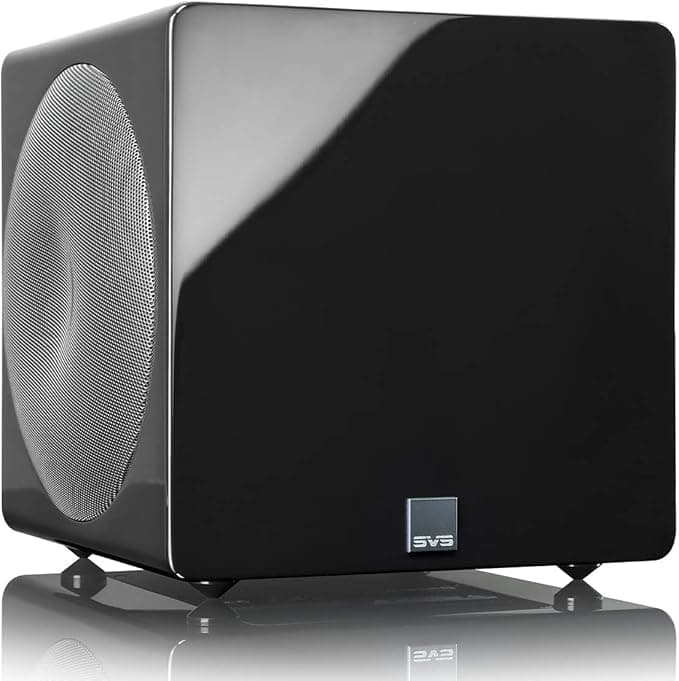
SVS 3000 Micro
8″ sealed · 800 W RMS · down to ~23 Hz · ~$700
Dual opposed 8-inch drivers cancel cabinet vibration, so you get genuinely deep, clean bass from a box the size of a toaster oven — and it won't rattle shelves or annoy the household in a compact space.
Budget pick for small rooms
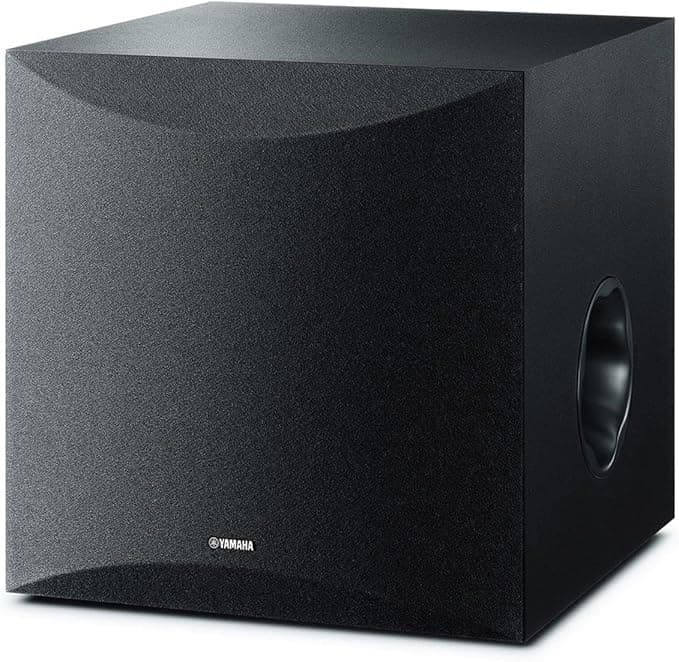
Yamaha NS-SW100
10″ ported · 50 W RMS · down to ~25 Hz · ~$230
In a small room you don't need huge output, which makes this the smart money move: honest 10-inch bass with Yamaha's quiet twisted port, at a price that leaves budget for isolation pads.
Best for medium rooms
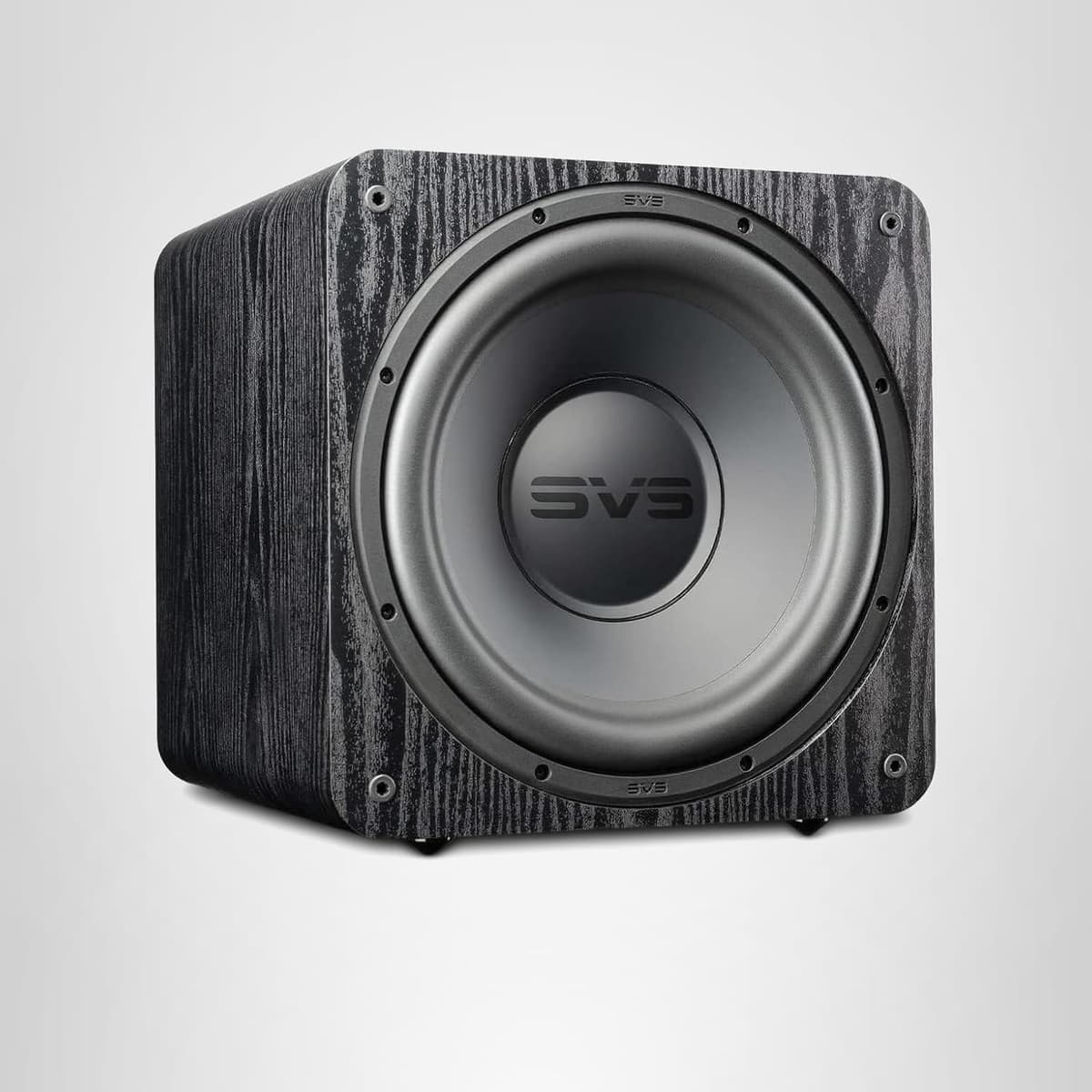
SVS SB-1000 Pro
12″ sealed · 325 W RMS · down to ~20 Hz · ~$600
The benchmark medium-room sub: true 20 Hz extension, app-controlled DSP for taming room modes, and enough output for a typical living room without dominating it visually.
Budget pick for medium rooms
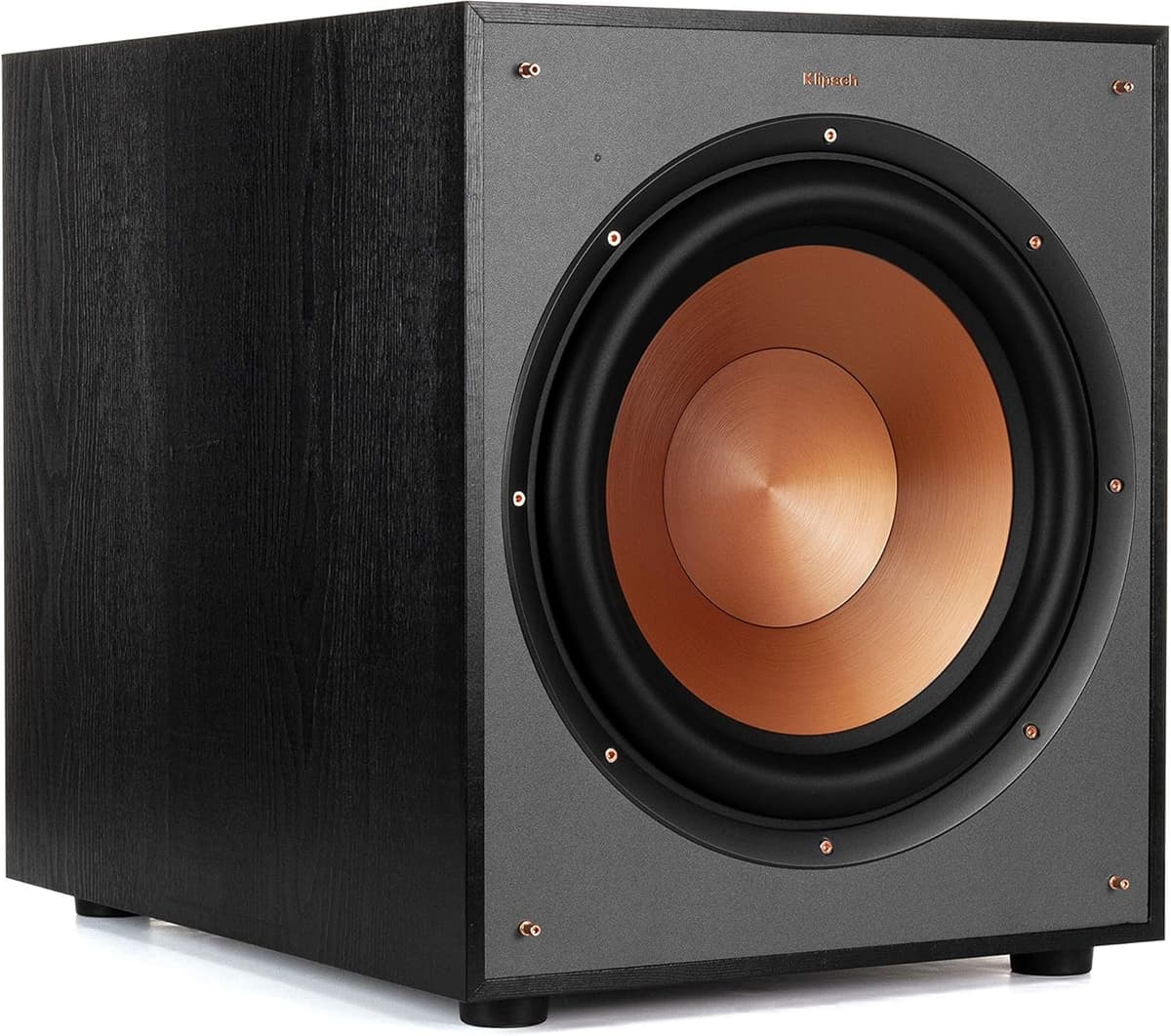
Klipsch R-120SW
12″ ported · 200 W RMS · down to ~29 Hz · ~$300
A punchy ported 12-inch that fills a normal living room with movie bass for grocery money when it's on sale — which is often.
Best for large rooms
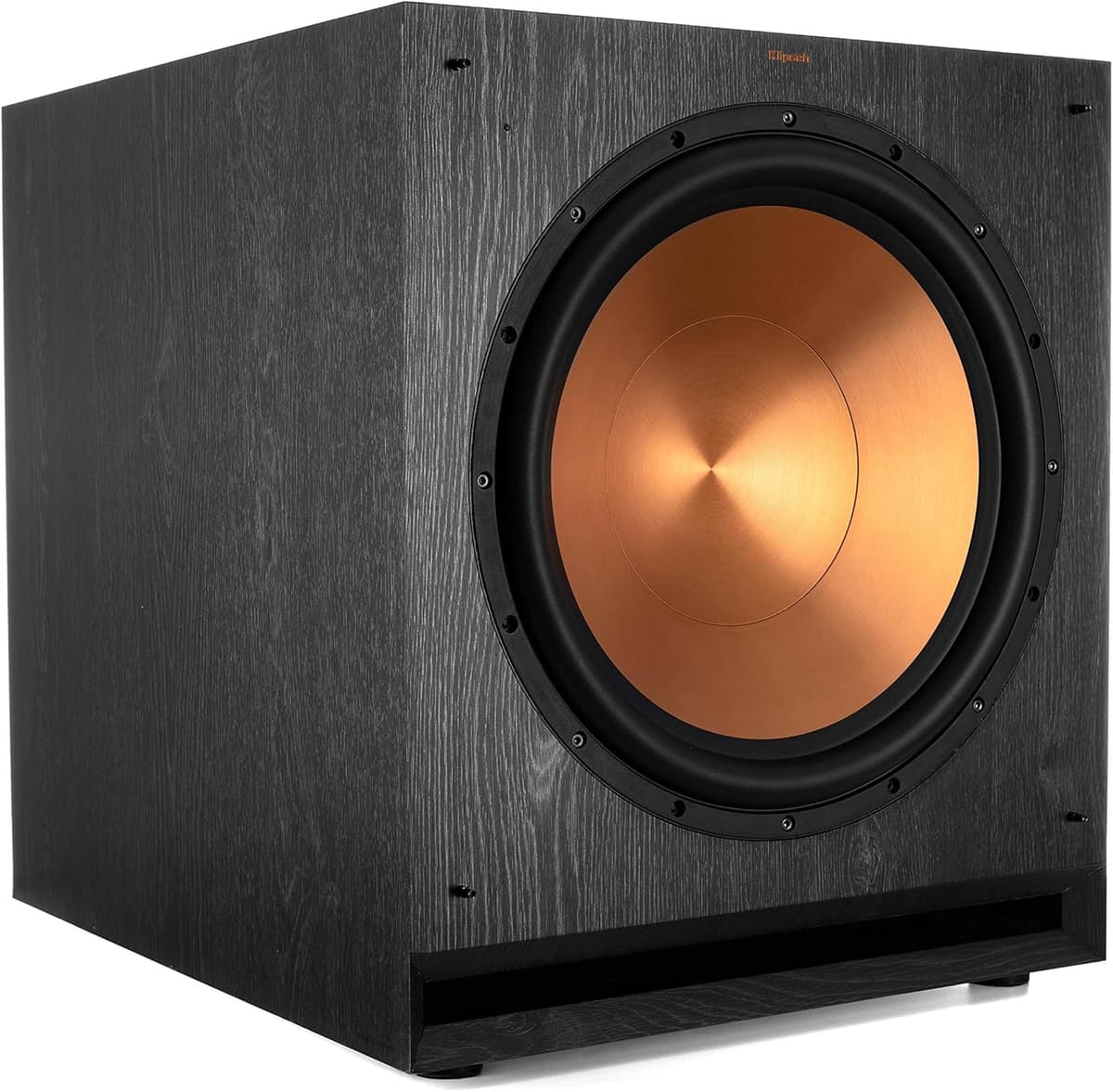
Klipsch SPL-150
15″ ported · 400 W RMS · down to ~18 Hz · ~$800
Large and open-plan rooms swallow bass energy; the answer is displacement. This 15-inch ported design moves serious air for the money and keeps headroom in reserve.
No-compromise large room pick
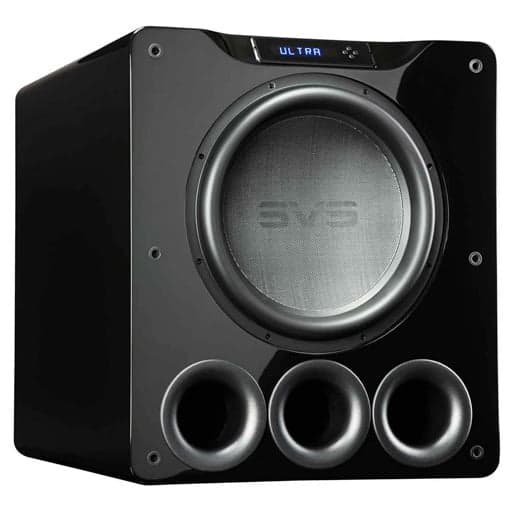
SVS PB16-Ultra
16″ ported · 1500 W RMS · down to ~15 Hz · ~$2200
If the room is dedicated and the budget allows, this is reference territory: 16 inches, 1,500 watts, and extension below what most rooms can even support.
How room size changes what you need
Volume, not floor area, is what matters
Bass energy fills the whole three-dimensional space. High ceilings, stairwells, and openings to other rooms all add volume the sub must pressurize — count them.
Small rooms favour sealed subs
Small rooms naturally boost low bass (room gain), which compensates for a sealed sub's gentler roll-off and keeps the sound tight rather than boomy.
Large rooms favour ported subs
With little room gain to help, a ported design's extra output below 30 Hz is the difference between feeling an explosion and just hearing it.
Two smaller subs often beat one big one
In awkward or large rooms, dual subs smooth out seat-to-seat bass response better than any single sub can. See the single vs dual guide before maxing out on one box.
Frequently asked questions
What size subwoofer do I need for a small room?
For rooms under about 1,500 cubic feet, an 8-to-10-inch sealed subwoofer is usually ideal. Small rooms reinforce low frequencies naturally, so a compact sealed sub sounds deeper in-room than its spec sheet suggests.
Is a 12-inch subwoofer too big for a bedroom?
Not too big to work, but usually more than you need — and harder to place without exciting boomy room modes. A good 8-or-10-inch sub with DSP control typically sounds cleaner in a bedroom-sized space.
How do open-plan rooms change the choice?
An open-plan space plays by the rules of its total connected volume, not the lounge area alone. Treat it as a large room: prioritise output (ported designs, bigger drivers) or plan for dual subwoofers.