The best subwoofers for home theatre
Movies are the most demanding thing you can ask of a subwoofer. Film soundtracks carry real content down to 20 Hz and below — helicopter blades, ship engines, the low-frequency effects channel doing its worst — and reproducing that at cinema-like levels takes displacement and amplifier headroom that music rarely demands.
For theatre duty we prioritise extension below 25 Hz, output headroom, and ported designs where space allows. Sealed picks are included where accuracy or placement flexibility wins.
Best home theatre subwoofer overall
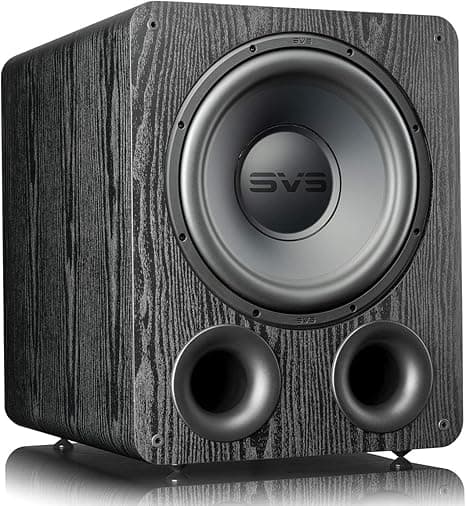
SVS PB-1000 Pro
12″ ported · 325 W RMS · down to ~17 Hz · ~$850
Ported extension to 17 Hz at this price is unheard of anywhere else. It does the physical, pressurising part of movie bass that lesser subs only gesture at, and the app DSP tames the boom port designs can suffer in smaller rooms.
Best for big rooms on a budget
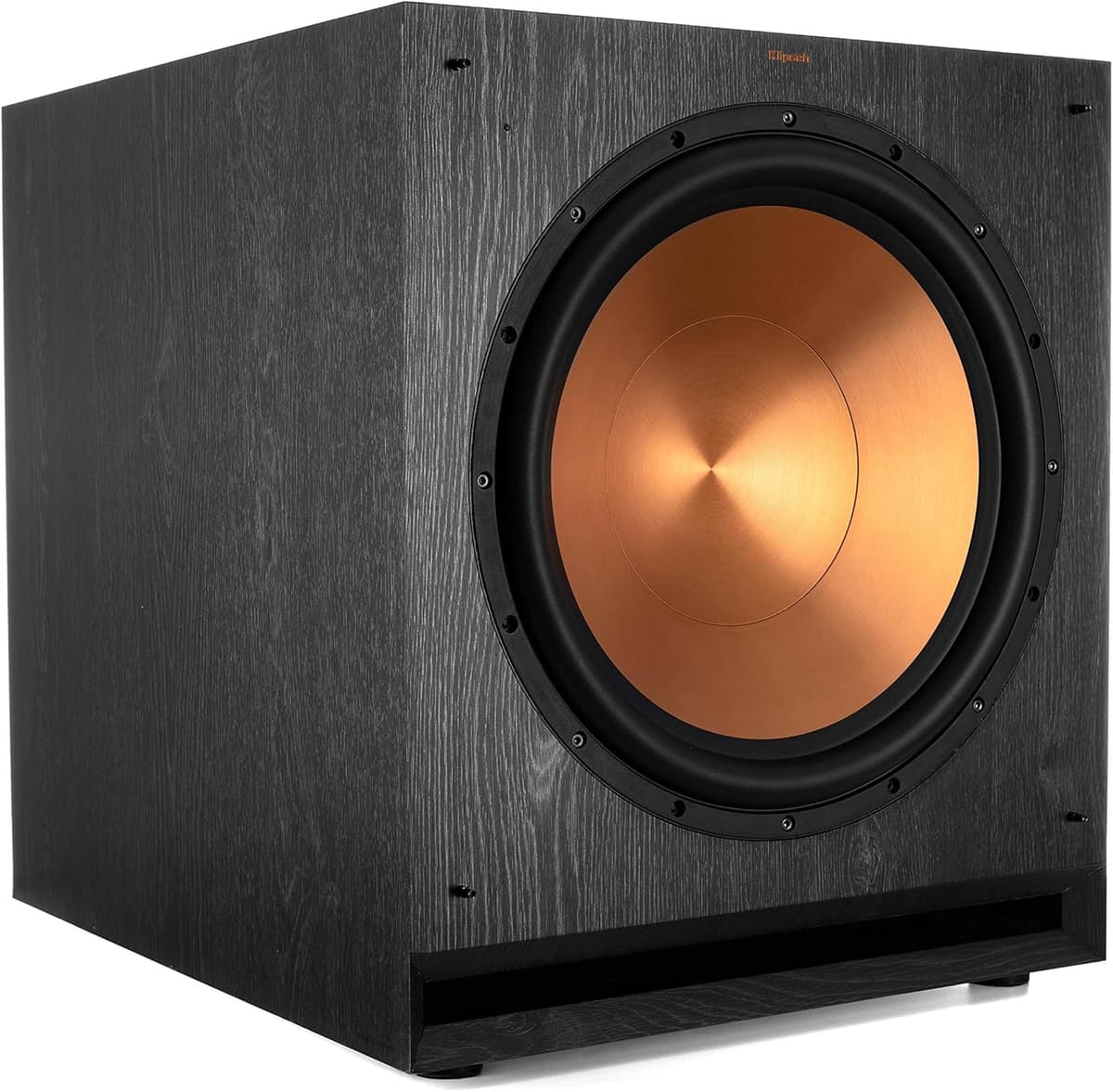
Klipsch SPL-150
15″ ported · 400 W RMS · down to ~18 Hz · ~$800
Fifteen inches of cone area is the cheapest honest route to filling a large or open-plan room. Less refined than the SVS picks, but movie effects want air moved, and this moves it.
Best sealed option
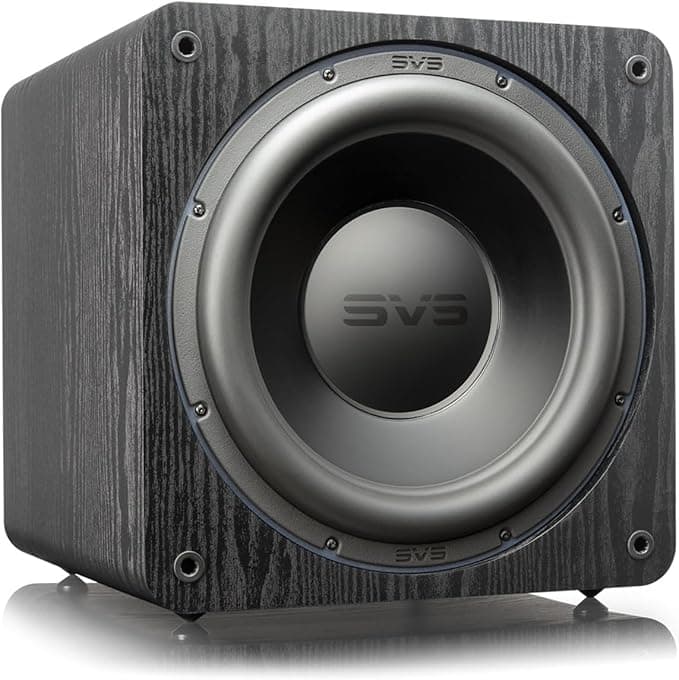
SVS SB-3000
13″ sealed · 800 W RMS · down to ~18 Hz · ~$1000
If placement is tight or you split time evenly with music, the SB-3000 gives near-ported depth with sealed speed and a much smaller footprint.
Budget pick
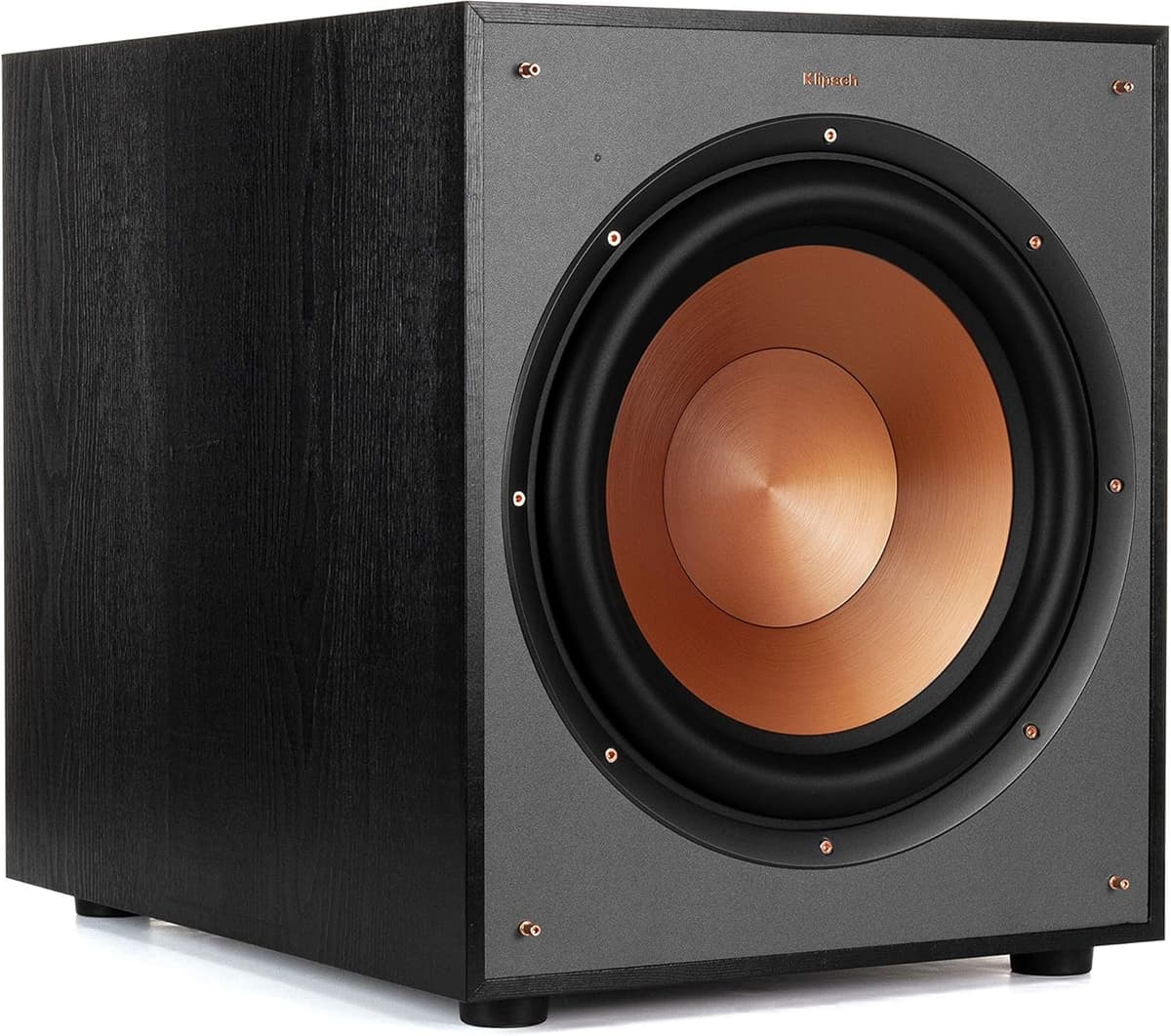
Klipsch R-120SW
12″ ported · 200 W RMS · down to ~29 Hz · ~$300
The entry ticket to real home theatre. It won't plumb the last octave, but crossed at 80 Hz under a 5.1 setup it delivers the slam that makes movie night feel like one.
End-game pick
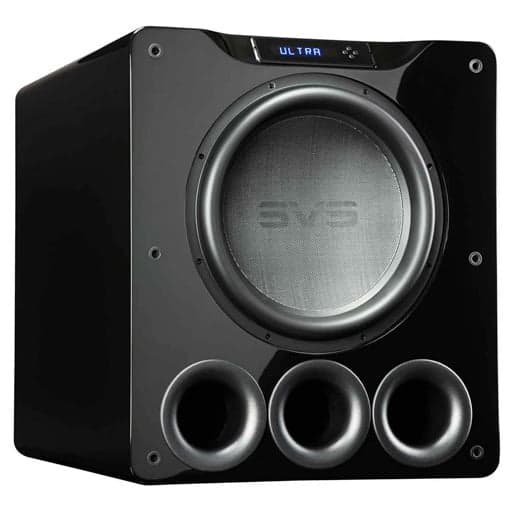
SVS PB16-Ultra
16″ ported · 1500 W RMS · down to ~15 Hz · ~$2200
For dedicated theatre rooms: reference extension, effortless output at any sane level, and the last subwoofer purchase you'd ever need to make.
What matters for movie bass
Extension below 25 Hz is where movies live
Music mostly stops at 35–40 Hz; film LFE does not. If home theatre is the priority, extension matters more than an extra dB of mid-bass punch.
Headroom prevents the worst sound a sub makes
A sub driven past its limits compresses and distorts exactly during the biggest moments. Buy more output than you need for your room size — you hear headroom as composure.
Set the crossover at 80 Hz and speakers to Small
The THX-standard 80 Hz crossover routes bass the sub does best away from your speakers. It's the single highest-impact setting in your AV receiver.
Room correction helps — after placement
Audyssey, Dirac, and YPAO clean up response peaks, but they can't fix a null at your seat. Run the subwoofer crawl first, then let correction polish.
Frequently asked questions
Is a 10 or 12-inch subwoofer better for home theatre?
For a typical living room, a quality 12-inch ported sub is the sweet spot: it moves enough air for film effects without needing a huge cabinet. Choose a 10-inch design when the room is small or placement is tight.
Do I need two subwoofers for home theatre?
One good sub delivers the depth and impact; two subs deliver it evenly across every seat. If you regularly host more than two viewers, dual smaller subs usually beat one larger one at the same total spend.
Ported or sealed for movies?
Ported, if you have the space — the extra output in the bottom octave is exactly where film soundtracks demand it. Sealed subs trade a little depth for a smaller box and tighter mid-bass, which suits smaller rooms.