SubwooferGenius

Yamaha subwoofers: honest bass, mostly on a budget

Yamaha's subwoofer range is refreshingly free of hype. For most people it comes down to two small, affordable ported subs that do exactly what they promise — add real low end to a first system without boom, rattle, or drama — and one statement flagship that sits in a completely different price bracket. There's very little in between, which actually makes the decision easy.

The thread running through the line is Yamaha's twisted-flare port. It's a genuinely useful bit of engineering: the port is shaped to reduce the airflow noise (that 'chuffing' sound) that plagues cheap ported subs when they work hard. That's why a $200 Yamaha stays clean at volumes where similarly-priced rivals start to huff and distort. For a starter system, that quiet composure matters more than a bigger number on the box.

Where Yamaha doesn't compete is the crowded $400–1,000 enthusiast middle — that's SVS, Klipsch, and REL territory. Yamaha's play is the honest budget end and, for the few who want it, a beautifully-built no-compromise flagship. Here's how the range sorts out.

Every Yamaha subwoofer we track

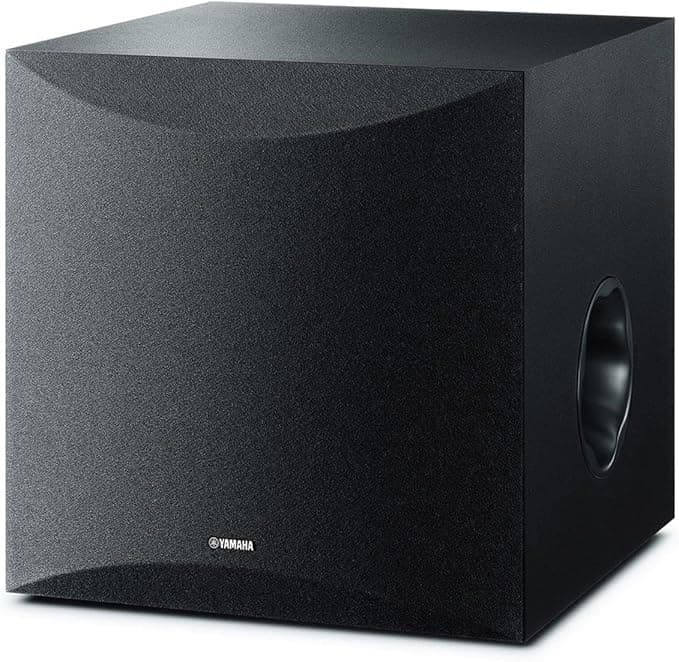
Yamaha NS-SW100 subwoofer

Yamaha · 10ported · ~$230

Yamaha NS-SW100

The best true-budget starter sub: honest 10-inch bass, twisted-port design that stays quiet, and a price that leaves room for stands and cables.

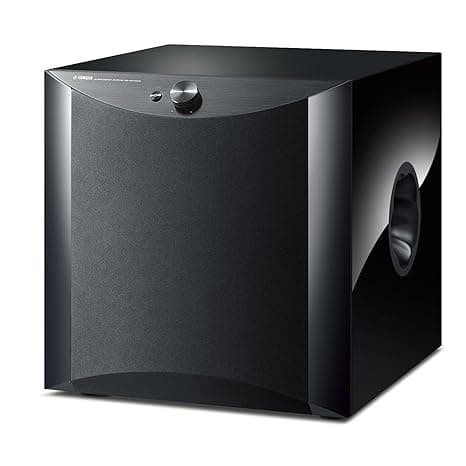
Yamaha NS-SW1000 subwoofer

Yamaha · 12ported · ~$2500

Yamaha NS-SW1000

Yamaha's statement subwoofer: a beautifully finished cabinet with Advanced YST drive and a twisted flare port that stays clean at levels most subs can't reach. New stock is scarce in 2026 — expect to hunt.

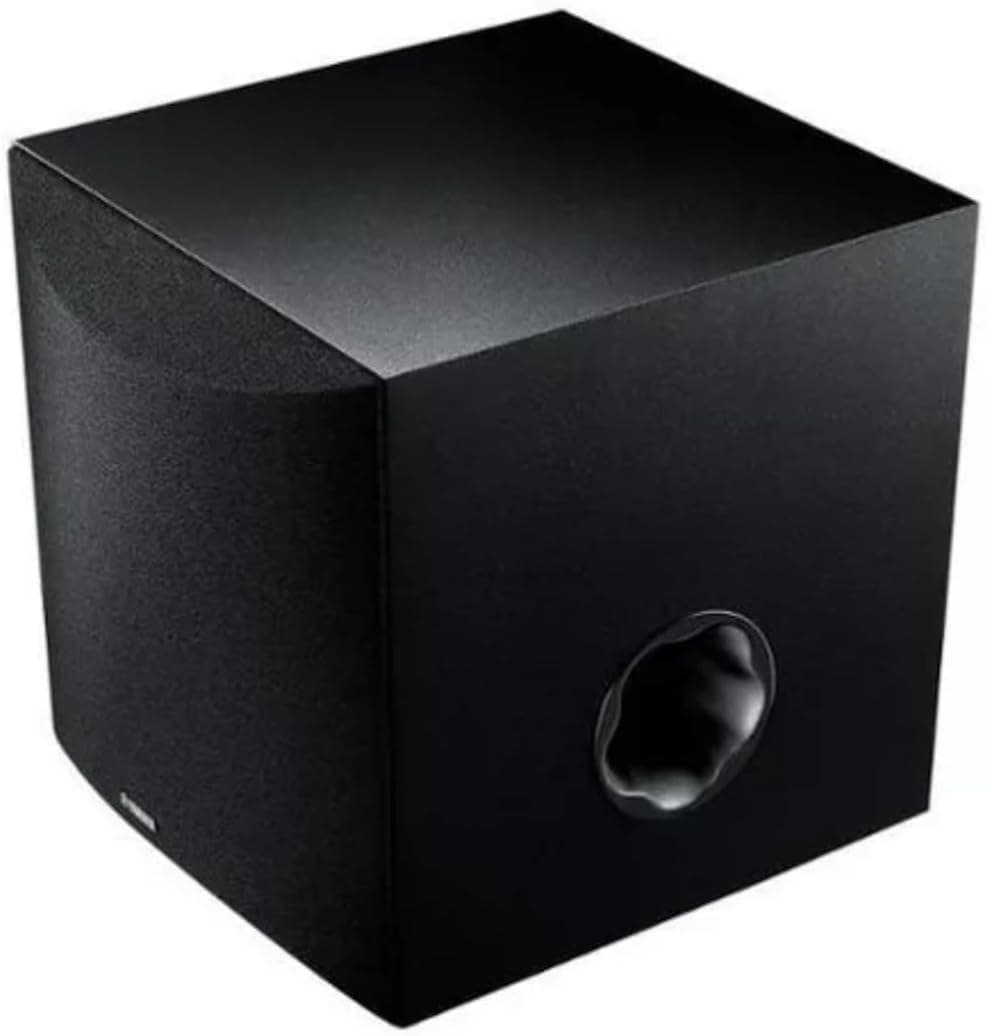
Yamaha NS-SW050 subwoofer

Yamaha · 8ported · ~$195

Yamaha NS-SW050

The entry point to real subwoofers: an honest 8-inch with Yamaha's quiet port design, right for desks, bedrooms, and first systems.

The Yamaha range, tier by tier

The budget starters (where almost everyone should look)

The NS-SW050 is the entry point to real subwoofers: an honest 8-inch with the quiet twisted-flare port, right for desks, bedrooms, and first systems. The NS-SW100 is the 10-inch step-up — more output for a normal living room while staying well under the price of an enthusiast sub. For most Yamaha buyers, the whole decision is choosing between these two.

Yamaha NS-SW050 · Yamaha NS-SW100

The statement piece (a different league entirely)

The NS-SW1000 is Yamaha's flagship: a beautifully finished cabinet with Advanced YST drive and a twisted flare port that stays clean at levels most subs can't reach. It costs roughly ten times the NS-SW100 and competes with high-end enthusiast subs, not the budget line it shares a badge with. New stock is scarce — treat it as a special-order piece.

Yamaha NS-SW1000

NS-SW050 vs NS-SW100: the only Yamaha decision most people make

Yamaha NS-SW050Yamaha NS-SW100
Driver8″10″
Enclosureportedported
Amplifier (RMS)50 W50 W
Low-frequency extension~28 Hz~25 Hz
Size (H×W×D)11.6″ × 11.4″ × 13.4″13.9″ × 13.9″ × 16.1″
Weight18.7 lb26.5 lb
App / DSPNoNo
Best room sizessmallsmall, medium
Apartment friendlyYesYes
Approx. price$195$230

How to choose within the Yamaha range

  • NS-SW050 for small spaces, NS-SW100 for a living room

    The 8-inch SW050 is ideal for a desk, bedroom, or small room where room gain helps it out. Step up to the 10-inch SW100 for a normal living room where you need to move more air. Both are quiet and honest — pick by room size, not by chasing specs.

  • The port design is the real feature

    Yamaha's twisted flare port keeps these subs composed at volume where cheap ported rivals start chuffing. It's why a budget Yamaha sounds cleaner than its price suggests — a better reason to buy than any single number on the spec sheet.

  • Don't overlook the SW050 to save a little

    The jump from SW050 to SW100 is small in money but meaningful in output. If you have a living room rather than a desk, buy the SW100 — under-buying a sub for the room is the most common budget mistake.

  • The NS-SW1000 is a want, not a need

    It's a superb sub, but at its price you're cross-shopping SVS SB-3000 and REL — buy it for the build and the badge, not because the range 'leads' there. Most people are better served spending less on a SW100 and more on the rest of the system.

Frequently asked questions

What's the difference between the Yamaha NS-SW050 and NS-SW100?

The NS-SW050 is an 8-inch sub for desks, bedrooms, and small rooms; the NS-SW100 is a 10-inch for normal living rooms with more output. Both use Yamaha's quiet twisted-flare port. The price gap is small, so choose by room size — the SW100 for anything bigger than a bedroom.

Are Yamaha subwoofers good for home theatre?

The budget NS-SW050 and NS-SW100 are great value for a first home-theatre or music system — honest bass that stays clean. For a larger room or serious cinema impact you'll eventually want more output than the budget models offer; that's where you step up to an SVS or Klipsch, or to Yamaha's own flagship NS-SW1000.

Why are Yamaha subwoofers so cheap?

The NS-SW050 and NS-SW100 are deliberately positioned as honest entry-level subs — modest amplifiers and single drivers, but with Yamaha's genuinely good twisted-flare port that keeps them quiet at volume. You're not getting app control or reference output; you are getting clean, reliable bass for the money, which is exactly the point.

Is the Yamaha NS-SW1000 worth it over the budget models?

It's a different class of product — a high-end flagship that competes with enthusiast subs costing many times the NS-SW100. It's worth it if you want reference-grade bass in a beautifully finished cabinet and value Yamaha's engineering. For most rooms and budgets, the NS-SW100 is the smarter buy and leaves money for the rest of the system.